
Reinstalling QuickBooks without losing data is straightforward as long as you separate two things clearly: your company file (your actual financial data) and the QuickBooks program itself. Your company file lives independently on your computer or network and isn't touched by uninstalling or reinstalling the application — as long as you follow a few precautions first.
Here's the safe, step-by-step process.
If you'd rather have this done for you directly, call +1-866-408-0444.
Before You Start: Two Things to Confirm
Locate your company file's current folder path. Go to File → Open or Restore Company in QuickBooks and note the full path before uninstalling anything.
Confirm you have a recent backup. Even though reinstalling shouldn't affect your company file, having a backup from within the last few days adds an extra layer of protection before making any system-level changes.
Step-by-Step: Safe Reinstall Process
1. Note Your License and Product Information
Before uninstalling, write down your QuickBooks license number and product number (found under Help → About QuickBooks). You'll need these during reinstallation, and losing access to them can delay the process unnecessarily.
2. Create a Manual Backup
Even though your company file isn't stored inside the QuickBooks program folder, go to File → Backup Company → Create Local Backup and save a copy somewhere outside the default QuickBooks folder — an external drive or a separate location on your computer.
3. Uninstall QuickBooks
Go to Windows Settings → Apps, locate QuickBooks, and uninstall it normally. This removes only the application files, not your company file, which lives in its own separate folder.
A common point of confusion here: people sometimes assume uninstalling QuickBooks deletes their financial data, since the icon disappears. In reality, the company file folder remains completely untouched on disk unless you manually delete it separately.
4. Run the Clean Install Tool
After uninstalling, run the QuickBooks Clean Install Tool from the Tool Hub. This clears leftover registry entries and installation remnants that a standard uninstall can leave behind, which helps the new installation start cleanly.
5. Download a Fresh Installer
Download the latest QuickBooks installer directly from Intuit's official site rather than reusing an old installer file, which may be outdated or incomplete.
6. Reinstall QuickBooks
Run the installer as Administrator, and enter your license and product number when prompted. Complete any restart the installer requests before opening QuickBooks for the first time.
If the installation itself runs into errors at this stage, call +1-866-408-0444 rather than troubleshooting installer errors blindly.
7. Reconnect to Your Company File
Open QuickBooks and use File → Open or Restore Company, then browse to the folder path you noted in step 1. Your company file should open exactly as it was before the reinstall.
8. Verify Your Data
Once open, check a few recent transactions and reports to confirm everything matches what you expect. This step is quick but worth doing before considering the reinstall fully complete.
What Actually Gets Removed vs. What Doesn't
Reinstalling removes the QuickBooks program files, your application preferences and settings, any installed add-ons (which you'll need to reinstall separately), and compatibility or shortcut settings tied to the old installation. It does not touch your company file (.QBW), your backup files (.QBB), or anything stored inside the company file itself — including your saved reports and memorized transactions. In short: anything tied to the application gets replaced, and anything tied to your actual financial data stays exactly where it was.
Related QuickBooks Reinstall Situations
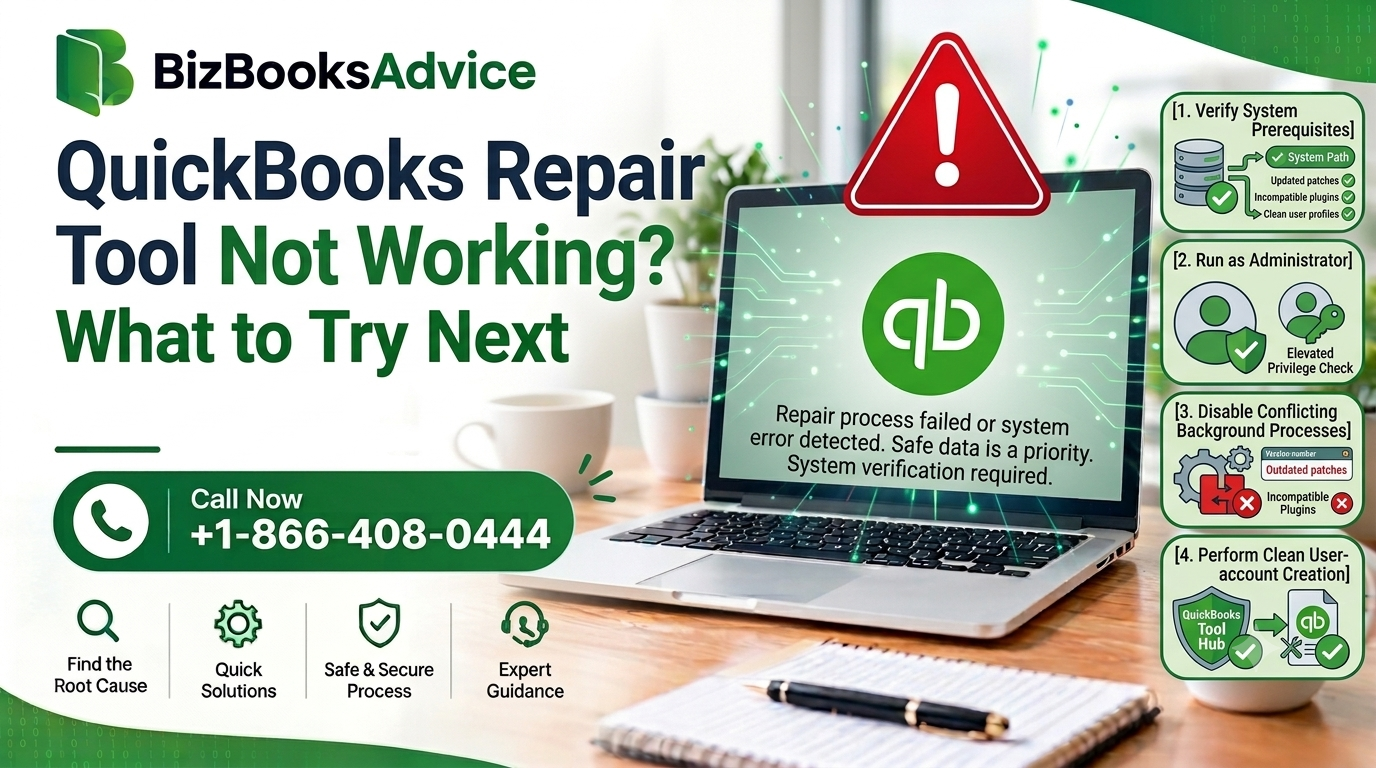
If you're reinstalling specifically because repairs through the Tool Hub aren't working, see QuickBooks Repair Tool Not Working to confirm a reinstall is actually the right next step.
If the goal is fixing a launch failure after an update rather than a full reinstall, see QuickBooks Won't Open After Update first — a reinstall isn't always necessary.
FAQs
Will I lose my saved reports or memorized transactions?
No — these are stored inside your company file, not the application itself, so they remain intact through a reinstall.
Do I need to reinstall third-party add-ons separately?
Yes, add-ons and integrations are tied to the application installation and will need to be reinstalled or reconnected afterward.
What if I can't find my original license number?
You can retrieve it through Intuit's account management portal if you registered your product, or by contacting support directly.
Is it necessary to run the Clean Install Tool, or can I skip straight to reinstalling?
It's not strictly required, but skipping it increases the chance of leftover files causing issues with the new installation, especially if the original install was already having problems.
Want help walking through this safely? Call +1-866-408-0444 and we can guide you through the reinstall without any data risk.


Write a comment ...